Movement can begin with the person in front of us.
Dance Your Ability and Family Dance are ways of creating shared movement experiences around the people who are actually present — their interests, mobility, communication, relationships, humour and energy.
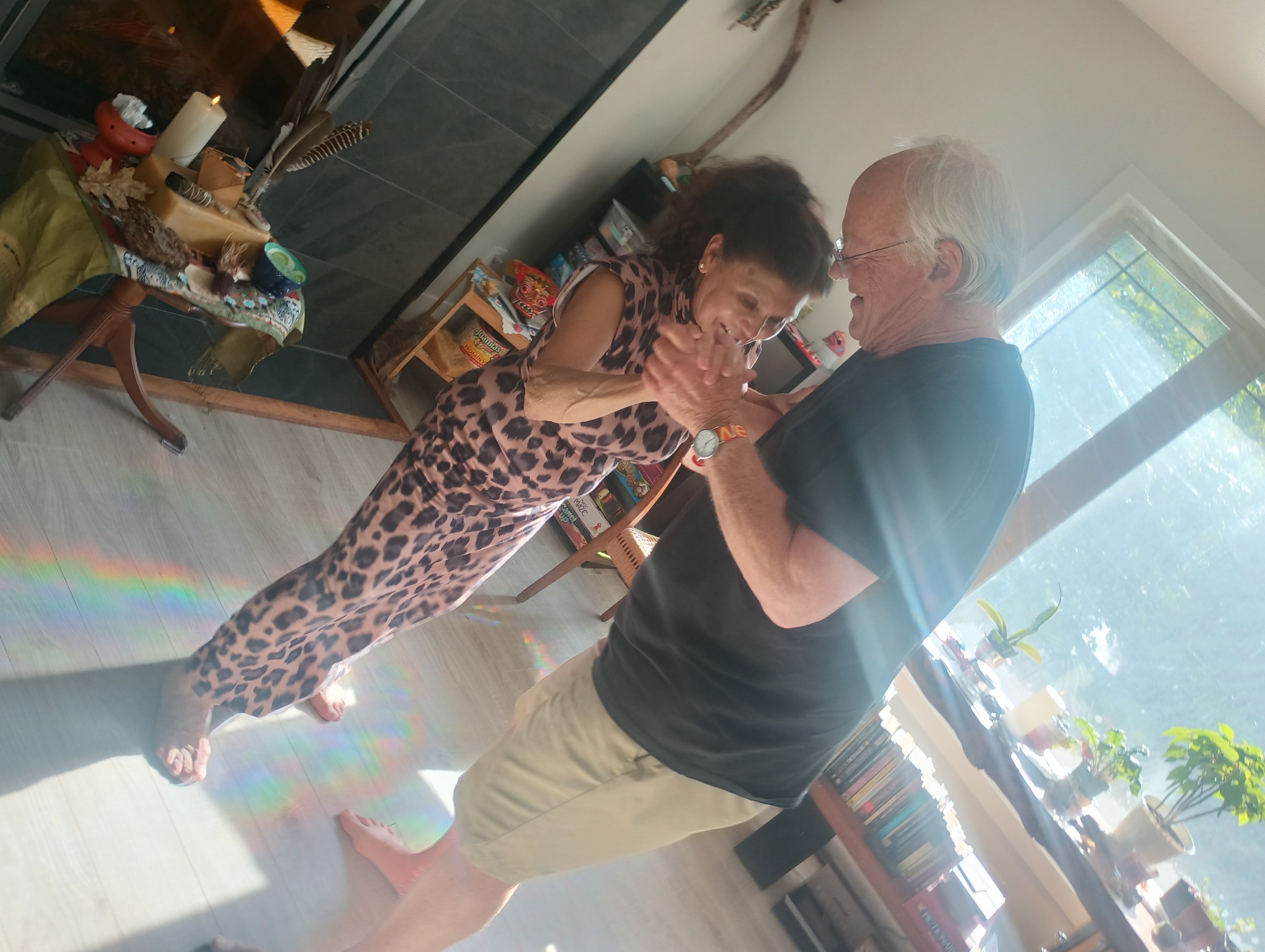
This can include elders, people with disabilities, families with babies and toddlers, or a person you care about who simply deserves an experience shaped around who they are rather than what a conventional dance class expects.
Who is this experience for?
The work can take different shapes. The common thread is that the dance adapts to the people — not the other way around.
Dance Your Ability
Accessible movement experiences for elders and people with disabilities, including people whose mobility, communication, cognition or energy may differ from a conventional dance-class setting.
Good for: care settings, community groups, families and people who already have a relationship with music or movement.
A gift for someone you love
Sometimes a meaningful gift is not an object, but time, attention and an experience built around the person receiving it.
A family can help gather the right people around a participant so the experience becomes shared rather than something performed at them.
Family Dance
A playful movement experience for parents, babies and toddlers, informed by Dance Your Ability and adapted to the needs of young families.
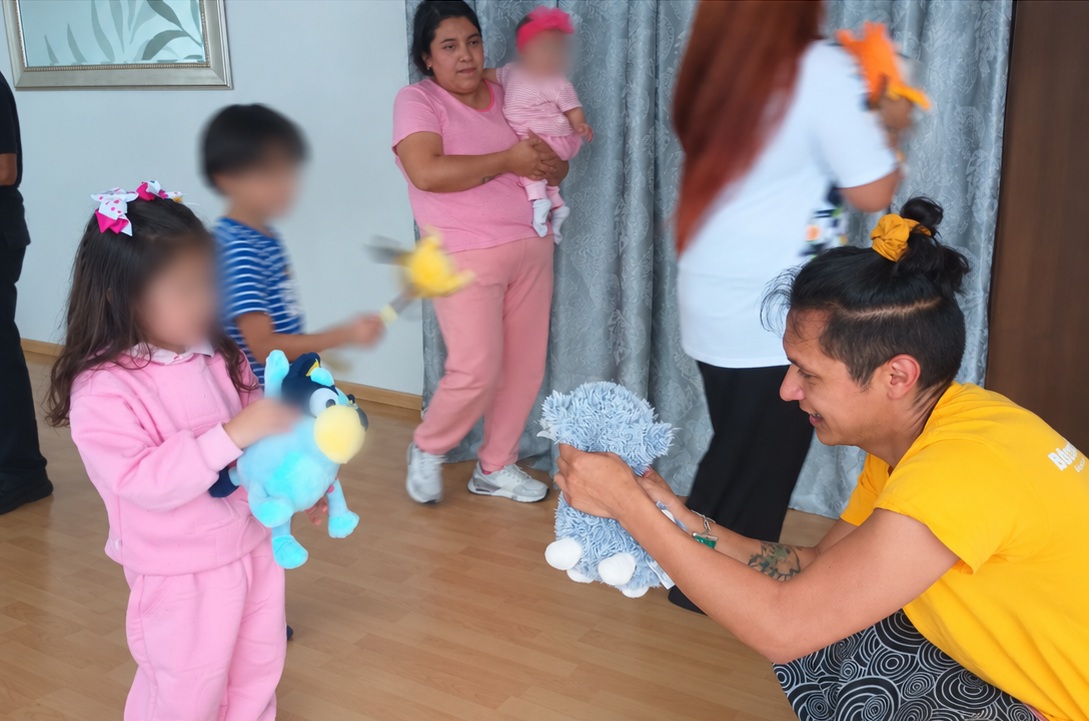
Plushies, songs, repetition, imitation and spontaneous play can become ways for adults and children to move together.
Start with what is available.
The invitation does not depend on standing, travelling across a floor, remembering a sequence, or moving in the same way as somebody else. A dance can begin with a pulse, a shared rhythm, a gesture, a seated exchange, a remembered song, a prop, or simply noticing one another.
The goal is not to create a lesser version of dance. It is to find the form of connection that is actually available to the people in the room.
Play can carry the conversation.
In Family Dance, the structure can be loose enough for a baby, toddler or young child to participate on their own terms while still giving adults something meaningful to do together.
In the family session pictured here, plushies became partners, messengers and invitations into shared movement. The object is not the point; it simply creates another route into attention, imagination and connection.
Responsive, relational and non-clinical.
I bring Dance Your Ability training together with hands-on caregiving and facilitation experience. The practice is grounded in meeting people where they are, keeping participation voluntary, and treating adults as adults even when play, props or imagination are part of the experience.
Usually stronger as a small shared gathering.
For private or gift-based Dance Your Ability experiences, the most meaningful container is often a group of roughly 6–15 people.
That group can include the main person receiving the experience, family members, friends, caregivers, support people and guests. Part of arranging the experience is helping it land at a size where people can build from one another's energy without the gathering becoming impersonal.
Individual one-to-one Dance Your Ability can make sense after a relationship has already developed and dancing together feels natural. It is not currently presented as a stand-alone public booking.
What would we talk about before booking?
Does the person need previous dance experience?
No. The starting point can be whatever relationship they already have with rhythm, music, gesture, play or shared attention.
Can caregivers or family members participate?
Yes. They can be part of the movement experience rather than standing outside it, as long as that supports the participant and the situation.
Is this therapy or rehabilitation?
No. This is a non-clinical dance and movement experience. It does not replace medical, therapeutic, rehabilitation or professional care.
What if communication is mostly non-verbal?
That does not remove agency. Gesture, expression, approach, withdrawal, repetition, energy and attention can all be meaningful information. The experience should remain responsive to those signals.
Read how I think about dignity, consent and responsiveness.
The CARE page is the doorway. The longer practice guide explains the values, service boundaries, intake thinking, experience formats and accountability behind the work in more detail.
Tell me about the person or group.
You do not need to arrive with a completed assessment. Tell me who the experience is for, what they enjoy, what kind of support is already present, and what you hope the time together might offer.