Dignity and responsiveness in movement.
How I hold Dance Your Ability and Family Dance experiences
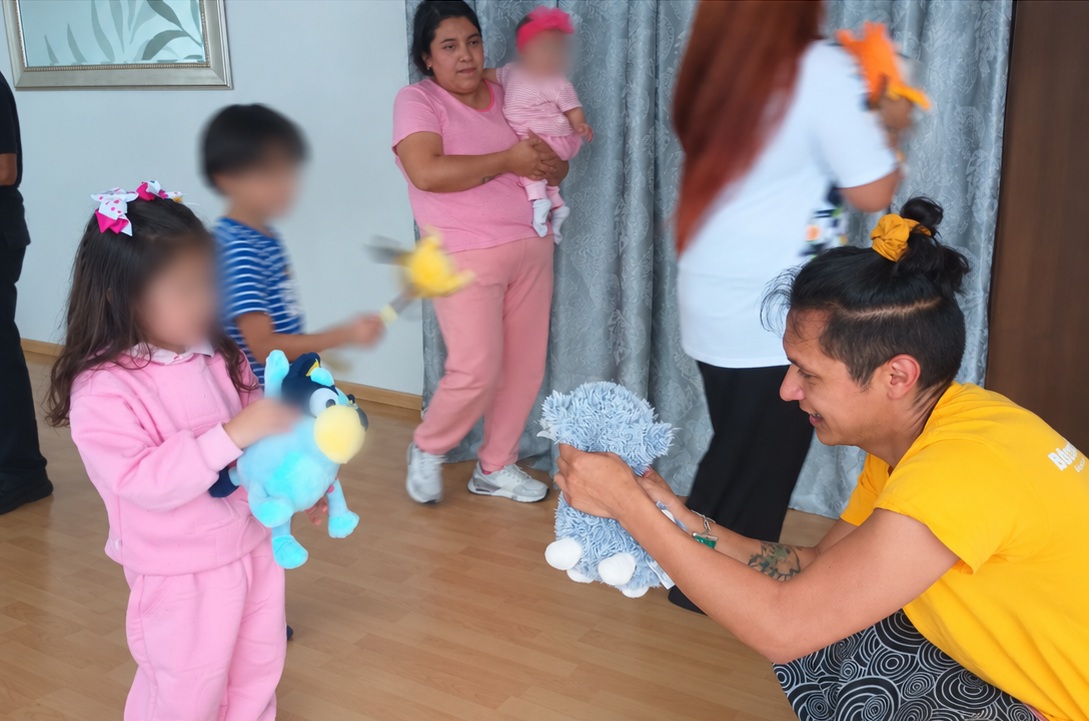
This guide is for someone who has already encountered my work and wants to understand the values, practical choices, and boundaries behind it. The central question is simple: will I meet the person you care about with dignity and responsiveness?
The participant helps shape the experience.
Dance Your Ability gives me a framework for offering movement without assuming that everybody should move, understand, or respond in the same way. My caregiving experience helps me notice what supports participation in real settings. Neither replaces listening to the person in front of me.
The goal is not to make a participant comply with a conventional class. The goal is to create conditions in which their interests, movements, communication, energy, and relationships can become part of a shared dance experience.
What dignity looks like in practice
Agency remains with the participant
I offer invitations rather than demands. A person may join, watch, pause, change the movement, or decline.
We begin with what is available
A seated pulse, a remembered song, a small gesture, a prop, watching another person, or a moment of shared attention can be a real beginning.
The plan serves the people
I prepare carefully, but I expect the plan to change. Energy, pain, attention, mood, sensory conditions and relationships can affect what is possible that day.
Family and caregivers may belong inside it
The experience may be designed around one participant while remaining meaningful for everyone present. It is shared time, not a performance staged for the family.
Adults are treated as adults
Play, imagination, music and props can be meaningful at any age without infantilizing adult participants.
Current experience formats
These experiences are most meaningful when 6–15 people can build with one another's energy. Part of arranging the session is therefore helping the gathering land in that range, counting the main person receiving the experience together with family members, guests, caregivers, support people, and others who meaningfully belong in the room. The experience can be oriented around one person while still becoming shared time for everyone present.
Individual one-to-one Dance Your Ability sessions can work after Pablo and a participant have already developed a relationship in which dancing together feels natural; they are not currently offered as a stand-alone public booking.
| Format | What it holds | Time and rate |
|---|---|---|
| Shared experience | A participant with family members, caregivers, support people, or invited guests. Designed around one person and meaningful for everyone present. | 90–120 minutes total Usually around $300 |
| Small family experience | A private Dance Your Ability experience for the whole family, including intergenerational gatherings. | 90–120 minutes total Usually around $300 |
| Organization or care facility | A one-time or recurring group within an existing care or community setting. Planned with staff. | 60 minutes Rate discussed with organization |
| Hosted Family Dance | A class for children with parents or caregivers, offered through a studio or community host. | 60 minutes Rate arranged with host |
A gift is a way of arriving — not a different method
A family member may inquire because someone they love has a relationship with music or dance and they want to offer presence rather than another object. Before a gift is confirmed, we discuss fit, how the idea will be introduced, and how the recipient's willingness will be understood. A gift should still belong to the person receiving it.
The dance is part of a larger experience.
A private or shared visit usually occupies 90–120 minutes, even when the movement portion lasts 45–60 minutes. The wider container includes preparation, arrival, transitions, closing and — when useful — time for the family or caregivers to reflect.
| 0:00 | Space preparation Set up music, objects, seating and the room. |
| 0:15 | Welcome Family, caregivers and participant arrive and settle. |
| 0:30 | Dance begins The invitation grows from what is present that day. |
| 1:15–1:30 | Dance closes The exact length follows the group's energy and needs. |
| 1:30–1:45 | Goodbye A gentle transition out of the experience. |
| +15–30 | Optional debrief Family or caregivers may reflect and discuss next steps. |
Why the typical private price is around 300 dollars
The amount reflects more than the minutes of instruction. It includes coordination with the paying client and the place where the participant lives, preparation for the person and setting, the session itself, unhurried transitions, and optional debrief time.
Intake begins with a conversation.
The paying client may not know every answer. The initial conversation begins the process of gathering what will help the experience feel safe, legible and responsive.
- Who will participate and what relationships are present in the room
- What the participant enjoys, avoids, remembers, or reaches toward
- How they communicate interest, consent, fatigue, discomfort, or distress
- Mobility, balance, pain, sensory, and environmental considerations
- Music, objects, cultural references, and forms of play that may invite connection
- Who will remain present and what personal, behavioural, or clinical support they provide
- What the family or organization hopes the time together might offer
- Anything that would make an invitation easier to understand or decline
Consent is ongoing.
Consent is not completed once by the person who pays. The participant's responses continue to shape the experience. Enthusiasm may be expressed through words, gesture, eye contact, repetition, approach, or renewed engagement. Discomfort may also arrive without words and deserves a response. Pausing or ending can be the right choice.
What informs my work.
I completed Dance Your Ability training with Shauna Devlin in November 2023 and later supported Dance Your Ability work as an assistant. I facilitate recurring movement in a day-program setting and have professional caregiving experience with adults with developmental disabilities. Family Dance sessions in Mexico helped me explore how the same principles can support young children and their caregivers through music, imagination, and plushies.
These experiences give me practical tools and judgement. They do not make me a clinician, and I do not present this work as clinical treatment.
Service disclaimer
Dance Your Ability and Family Dance are non-clinical dance and movement experiences. They are not psychotherapy, physiotherapy, occupational therapy, rehabilitation, medical treatment, or a substitute for professional care. I do not diagnose or treat health conditions through this service. Participants should follow relevant medical advice, and required caregivers or support staff remain responsible for personal and clinical care.
Responsiveness includes honest limits
You may ask how I would respond to a particular communication style, mobility consideration, family dynamic, or care setting. I may ask for more information, suggest that a support person remain present, adapt the proposal, or decide that I am not the right fit. Questions are welcome before trust is expected.
Begin with what you know
You do not need to arrive with a completed assessment. Tell me about the person or group, what draws them toward music or movement, and what you hope the time together might offer.